



Accidents happen, and sometimes a fall or a hard blow can leave you with a broken or knocked-out tooth. But what should you do in those crucial minutes before reaching an emergency dentist? The key is to stay calm and act quickly. Whether it’s a broken, knocked-out, or cracked tooth, knowing the right steps can make a huge difference in saving your tooth and reducing pain.
In this guide, we’ll cover everything you need to know to handle these dental emergencies before you make your way to Media Hometown Dental. Quick action can help you avoid further damage and pain, so let’s dive into what you can do right away.
Understanding Dental Emergencies
A dental emergency typically involves injuries that damage the teeth, gums, or mouth in a way that requires immediate attention. In cases of broken, cracked, or knocked-out teeth, it’s important to act swiftly to reduce the risk of permanent damage.
A broken tooth can occur from a sudden impact, like biting down on something hard or in an accident. Cracked teeth are usually the result of long-term stress on the tooth, like clenching or grinding. A knocked-out tooth is the most dramatic of all, but it’s crucial to note that there’s still a chance of saving the tooth if treated immediately.
Why is quick action so important? The sooner you get professional help, the higher the chances of saving your tooth or preventing infection. A delay in treatment can cause a lot of pain, complications, and, in some cases, the loss of the tooth altogether.
Emergency dental care plays a crucial role in these situations. An emergency dentist in Media will assess the extent of the injury, provide treatment, and offer pain relief options to make you more comfortable while addressing the damage.
What to Do for a Broken Tooth
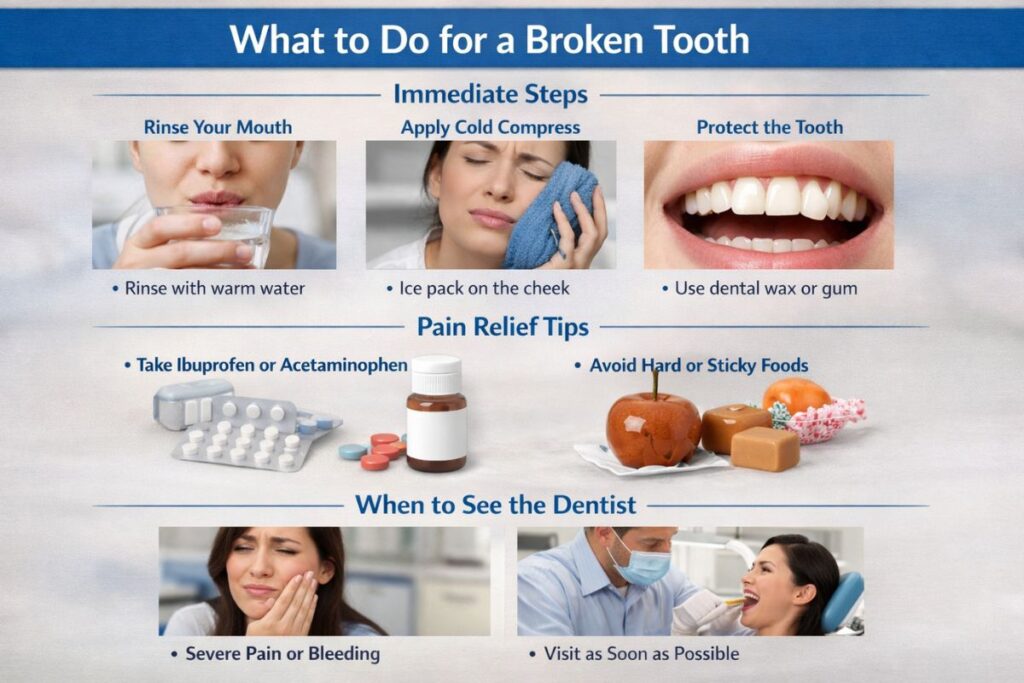
A broken tooth can be painful and unsettling, but staying calm and following the right steps can help minimize further damage and ease discomfort. Here’s what to do:
Immediate Steps:
- Rinse Your Mouth: Gently rinse your mouth with warm water to clean the area. This helps remove any debris and prevents infection. Avoid using hot or cold water as it may aggravate the pain.
- Control Swelling: Apply a cold compress to the outside of your cheek or mouth near the broken tooth. This will help reduce swelling and numb the area, providing some pain relief. Use a cloth-wrapped ice pack for 15-20 minutes at a time.
- Protect the Tooth: Avoid using the broken tooth to chew or bite down, as this can worsen the damage. If the broken tooth has a sharp edge, use dental wax or sugar-free gum to cover it and prevent it from cutting your tongue or gums.
Pain Relief Tips:
- Over-the-Counter Pain Relievers: Non-prescription pain relievers like ibuprofen or acetaminophen can help reduce pain and inflammation. Be sure to follow the dosage instructions carefully.
- What to Avoid: Avoid taking aspirin, as it can increase bleeding. Also, refrain from chewing on hard or sticky foods, which can worsen the damage.
- Prevent Worsening Damage: Try to avoid consuming anything that is too hot or cold, as this can cause discomfort in a broken tooth. Stick to soft foods and beverages while you await dental care.
When to See the Dentist:
It’s important to see a dentist as soon as possible after a tooth breaks. If the break is severe or if you experience intense pain, bleeding, or signs of infection, you should visit an emergency dentist right away.
For minor breaks, it may be okay to wait a few hours, but don’t delay treatment. Even a small crack can lead to further complications if left untreated. If in doubt, always err on the side of caution and contact Media Hometown Dental for guidance.
How to Handle a Knocked-Out Tooth
If you’ve knocked out a tooth, don’t panic. There’s still hope! Here’s what you can do to maximize your chances of saving the tooth:
Step-by-Step Instructions:
- Pick it Up Properly: If you can find the tooth, pick it up by the crown (the part that’s visible) and avoid touching the root.
- Clean Gently: If the tooth is dirty, rinse it gently with water. Do not scrub it or remove any tissue fragments attached to the tooth.
- Reimplant the Tooth: If possible, gently place the tooth back into its socket. Hold it in place with gentle pressure, ensuring it’s aligned properly.
If Reimplantation Isn’t Possible:
- If you can’t reimplant the tooth, place it in a container with milk or a saline solution. These will help preserve the tooth until you can get to the dentist.
- Avoid placing the tooth in water, as it can damage the delicate root cells.
Time Factor:
Time is critical. Ideally, you should get to an emergency dentist within 30 minutes. The sooner the tooth is reimplanted, the higher the chances of it successfully integrating back into the jawbone. After an hour, the likelihood of saving the tooth decreases.
Dealing with a Cracked Tooth
A cracked tooth may not always be as dramatic as a knocked-out one, but it still requires prompt attention to prevent further damage.
How to Recognize a Cracked Tooth:
- Pain When Chewing: You may experience sharp pain when chewing or biting down, especially if the crack is deep.
- Sensitivity to Hot or Cold: A cracked tooth can cause sensitivity to temperature changes, leading to discomfort when drinking hot or cold beverages.
First Aid Tips:
- Protect the Tooth: If the crack is large, cover it with dental wax or a sugar-free gum to protect it until you can see your dentist in Media.
- Avoid Hot and Cold Foods: These can aggravate the pain and sensitivity.
- Pain Relief: Over-the-counter pain relievers can help manage discomfort in the interim.
Emergency Treatment:
- The dentist will assess the crack to determine whether you need a crown, filling, or possibly a root canal if the damage has reached the pulp of the tooth.
- Cracked teeth can be quite tricky to repair, and the treatment may vary based on the size and location of the crack.
What to Expect at the Emergency Dentist
When you visit an emergency dentist in Media, here’s what you can expect:
Initial Assessment:
- The dentist will perform an examination, which may include taking X-rays to assess the extent of the damage.
- They will evaluate whether the tooth is salvageable or needs to be extracted.
Treatment Options:
- For Broken Teeth: Bonding, crowns, or fillings may be used to restore the tooth.
- For Knocked-Out Teeth: If reimplantation is successful, the dentist will ensure the tooth is properly stabilized.
- For Cracked Teeth: A crown or root canal may be necessary, depending on the severity of the crack.
Pain Management:
- Dentists use local anesthesia to numb the area, ensuring the procedure is as pain-free as possible.
- Sedation options may also be available for more severe cases.
Prevention Tips to Avoid Future Dental Emergencies
Preventing dental emergencies is key to maintaining your oral health. Here are some simple tips:
Protective Measures:
- Mouthguards: If you play sports, wearing a mouthguard can help protect your teeth from impact.
- Avoid Hard Foods: Be cautious when eating hard foods like candy, ice, or popcorn kernels to avoid damaging your teeth.
- Good Oral Hygiene: Brush and floss regularly to prevent decay and other issues that could weaken your teeth.
Routine Checkups:
- Regular dental checkups help identify weaknesses or cracks in your teeth before they turn into emergencies. Your dentist can recommend treatments to strengthen your teeth.
In any dental emergency, time is of the essence. Whether it’s a broken, cracked, or knocked-out tooth, knowing what to do in the critical moments before reaching Media Hometown Dental can help preserve your tooth and minimize pain.
If you’re in need of urgent dental care, don’t wait. Contact Media Hometown Dental immediately. Our team is here to provide professional, compassionate care to get you back to feeling your best. Book your appointment now to ensure a swift and effective recovery.
People Also Ask
How long do I have to get a knocked-out tooth reimplanted?
You should get to an emergency dentist within 30 minutes to maximize the chances of saving the tooth.
What are the signs of a cracked tooth?
Pain when chewing, sensitivity to hot or cold, and visible cracks or chips are common signs of a cracked tooth.
Can I fix a cracked tooth at home?
No, a cracked tooth requires professional care. Protect it with dental wax and avoid chewing on it until you can see a dentist.
How long does it take to heal after a broken tooth is treated?
Healing time depends on the treatment, but it typically takes a few days to a couple of weeks for full recovery, depending on the severity of the break.
Is it safe to use dental wax on a broken tooth?
Yes, dental wax can help protect the broken tooth and prevent it from cutting your gums or tongue until you can see a dentist.